
Concrete Surfaces Protected From Weather Cycles
Concrete Sealing & Restoration in Nashville for driveways, patios, and surfaces showing cracks from freeze-thaw expansion
Tennessee freeze-thaw cycles force water into concrete pores where it expands during winter cold snaps, creating hairline cracks that widen over subsequent seasons until surface deterioration requires replacement rather than repair. Summer heat then accelerates UV breakdown of unsealed concrete, causing surface chalking and color fading that weakens structural integrity. Exterior Pros TN seals and restores concrete driveways, patios, and surfaces across Nashville, Mount Juliet, and La Verne using a process that begins with thorough cleaning, continues with crack repair and damage correction, and finishes with protective sealant application that prevents water infiltration and UV degradation.
The restoration process requires proper surface preparation because sealant only adheres to clean, dry concrete; any dirt, oil, or existing coatings must be removed through pressure washing and chemical treatment before crack filling and sealant application. The detailed inspection ensures that expansion joints remain functional, control joints are intact, and any underlying drainage issues that contribute to cracking are identified before sealing traps moisture beneath the surface.
Request an on-site assessment to evaluate current cracking patterns and determine whether your concrete needs full restoration or just protective sealing.
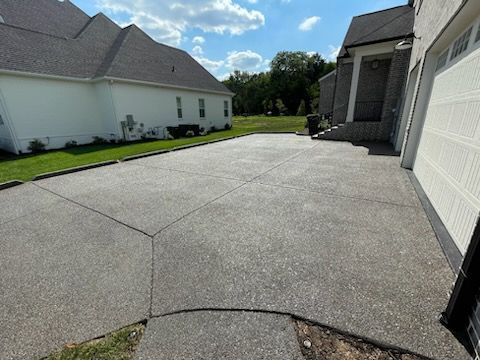
How Sealant Application Prevents Long-Term Damage
Protective sealant works by filling concrete pores with a barrier layer that blocks water penetration and reflects UV radiation, addressing the two primary causes of premature concrete failure in Middle Tennessee climate conditions. Water infiltration leads to freeze-thaw damage during winter and provides pathways for soil erosion beneath slabs, while UV exposure breaks down the cement paste that binds aggregate particles together, creating the powdery surface residue you see on old, unsealed driveways.
After sealant cures, you notice that water beads on the surface instead of soaking into pores, cracks no longer expand with each freeze cycle, and the concrete maintains its color without developing the gray, weathered appearance of untreated surfaces. The written checklist process ensures the same bonded and insured crew follows proper cure times, application thickness, and edge detail work during each service, which matters for driveways and patios where uneven coverage leads to premature sealant failure in high-traffic zones.
Eco-friendly and standard sealant options are available depending on environmental concerns, slip resistance requirements, and whether the surface connects to landscaped areas where runoff affects plants. Sealant typically requires reapplication every three to five years depending on traffic levels, sun exposure, and whether the concrete experiences chemical exposure from de-icing salts or automotive fluids.
Common Questions About This Service
Concrete sealing and restoration questions often address timing, longevity, and whether existing damage can be repaired or requires replacement.
What's the difference between sealing and restoration?
Sealing applies protective coating to sound concrete, while restoration includes crack repair, surface leveling, and damage correction before sealant application; surfaces with extensive cracking or spalling require restoration to prevent continued deterioration.
How long does concrete sealant last in Nashville?
Most sealants provide three to five years of protection depending on traffic levels, UV exposure, and whether the surface experiences freeze-thaw cycles or chemical exposure from de-icing salts and automotive fluids common in Middle Tennessee winters.
Can sealing fix cracks that are already present?
Small hairline cracks can be filled with specialized repair compounds before sealing, but large structural cracks or widespread spalling indicate underlying issues that may require slab replacement rather than surface restoration.
When is the best time to seal concrete?
Spring and fall offer ideal conditions because sealant requires temperatures between 50 and 90 degrees for proper curing, and the surface must remain dry for 24 to 48 hours after application, making Nashville's moderate shoulder seasons preferable to summer humidity or winter moisture.
What happens if concrete isn't sealed?
Unsealed concrete absorbs water that expands during freeze-thaw cycles, creating progressive cracking; UV exposure then breaks down surface cement paste, causing chalking and color loss; both processes accelerate until the concrete requires replacement instead of simple sealing.
Exterior Pros TN handles concrete sealing and restoration for residential driveways, patios, and walkways throughout the Nashville metro area using detailed inspection protocols and eco-friendly sealant options. Call (615) 592-2474 to arrange a property visit and review your concrete surfaces for damage that requires attention before protective sealing.